How to Choose Raw Materials for Food Product Development
A Professional Guide
In every food product development process, the choice of raw materials is one of the most important factors determining the product's success. Raw materials affect every characteristic: taste, texture, nutritional value, stability, shelf life, and economic cost. Choosing raw materials is not simply selecting ingredients with the best taste – a wide range of technological, industrial, and regulatory considerations must be taken into account. Food technologists must understand how each raw material affects the entire food system. Many companies therefore rely on experts in food product development and advanced labs like Gruda Food Lab, which provide broad professional knowledge and extensive experience in selecting raw materials suited to industrial-scale production.
Types of Raw Materials in the Food Industry
Basic Raw Materials
The main ingredients making up the bulk of the product: flour, sugar, milk, oils, and water.
Functional Ingredients
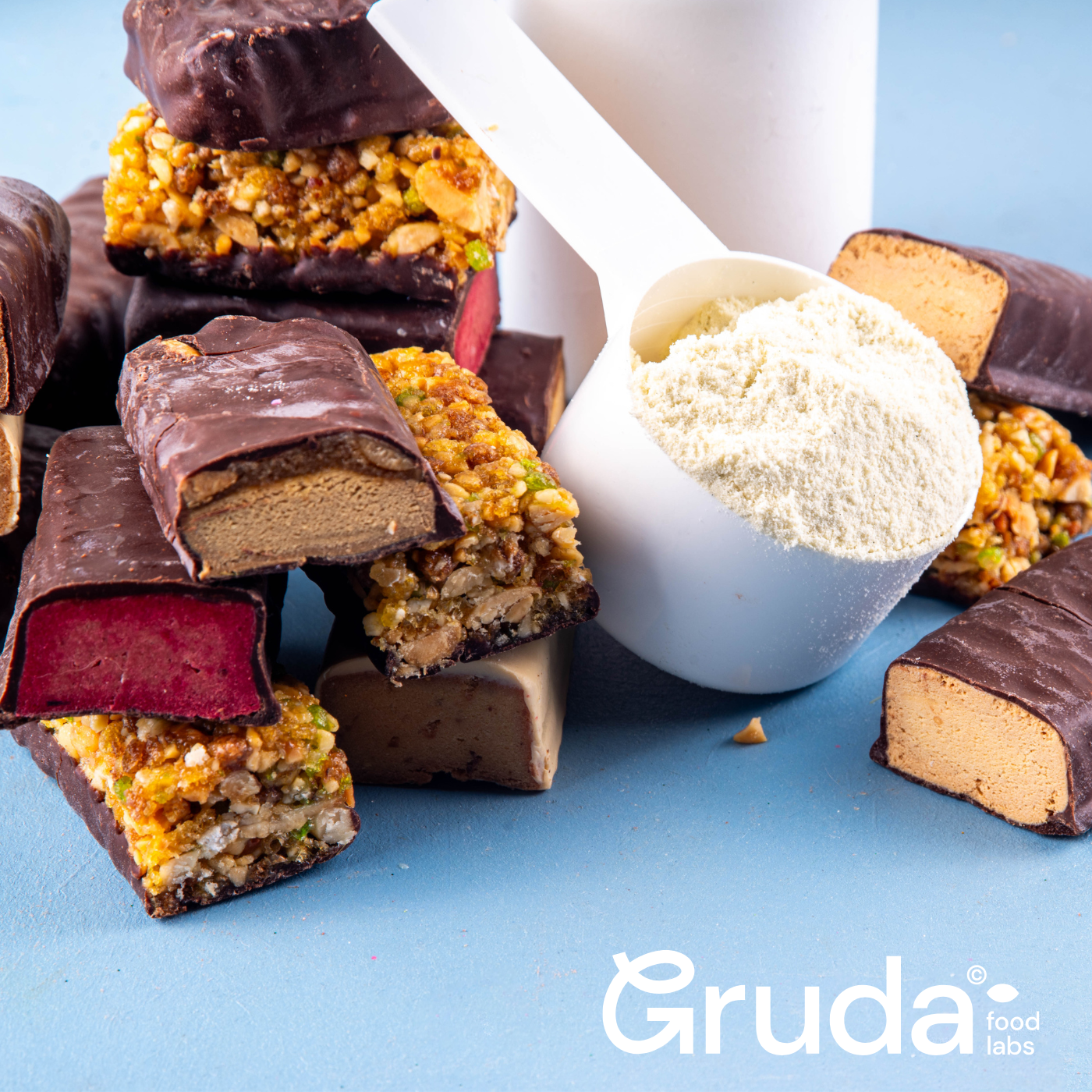
Affect technological properties beyond taste: proteins, dietary fiber, stabilizers, and emulsifiers. Particularly important in functional beverages and protein bars.
For more detail: Developing Functional Beverages | Developing Protein Bars
Food Additives
Stabilizers, emulsifiers, sweeteners, and colorings – used in small quantities with significant impact on texture, stability, and shelf life.
Key Criteria for Choosing Raw Materials
Technological Properties
Proteins affect texture and water binding; fats affect mouthfeel and aroma; starches affect viscosity and stability under heat.
Stability
Does the ingredient remain stable during processing? Does it maintain its properties over shelf life? Does it react with other ingredients in the formulation?
Regulatory Compliance
Every raw material must be approved in all relevant markets. Novel ingredients require regulatory review before development begins.
For more detail: Food Regulation in Product Development
Cost and Market Availability
Examine not only current price but also supply stability. A hard-to-source ingredient can create production problems and supply chain risks.
Protein Sources – A Key Raw Material Decision
- Whey protein: High biological value, good solubility, neutral taste – but can cause texture hardening in bars over time.
- Pea protein: Popular in vegan products; requires flavor masking for green, grassy notes.
- Soy protein: Widely available and cost-effective; may produce a beany aftertaste.
- Rice protein: Hypoallergenic; typically blended with other proteins to improve the amino acid profile.
Stabilizers and Emulsifiers
Stabilizers (xanthan gum, guar gum, carrageenan) and emulsifiers (lecithin, monoglycerides) affect stability, texture, and appearance. Selecting the right combination requires understanding how they interact with other ingredients in the specific product matrix.
Shelf Life Considerations in Raw Material Selection
Raw material choice directly affects shelf life. Understanding how each ingredient behaves over time is essential.
For more detail: Shelf Life Testing in Food Products
The Food Technologist's Role
The food technologist evaluates and selects raw materials through a structured process balancing technological performance, regulatory status, cost, and availability. Advanced labs like Gruda Food Lab enable trial testing of different raw materials before finalizing the formulation.
The choice of raw materials is one of the critical stages in food product development, affecting every characteristic from taste to shelf life. Through technological knowledge, lab testing, and industry experience, it is possible to select raw materials that enable the development of a high-quality, stable product. For the broader development context: Food Product Development
Related Articles

Let’s create something completely new
We believe in the power of collaboration. Let's explore projects, share insights, and work together to expand the boundaries of food.
