Scale-Up in Food
From Lab Development to Industrial Production
In food product development, one of the greatest challenges is the transition from lab development to industrial production – a stage known as Scale-Up. It involves adapting the formulation and production process so the product can be manufactured at large scale. Very often, a product that works perfectly in the lab does not behave the same way on an industrial production line. Differences in equipment, temperature, mixing speed, and process times can significantly alter the product's characteristics. Scale-Up therefore requires a combination of expertise: food technology, process engineering, food chemistry, and production line operation. Gruda Food Lab helps food companies make an efficient transition from development to production and reduce the risks involved in launching a new product.
Why Scale-Up Is So Complex
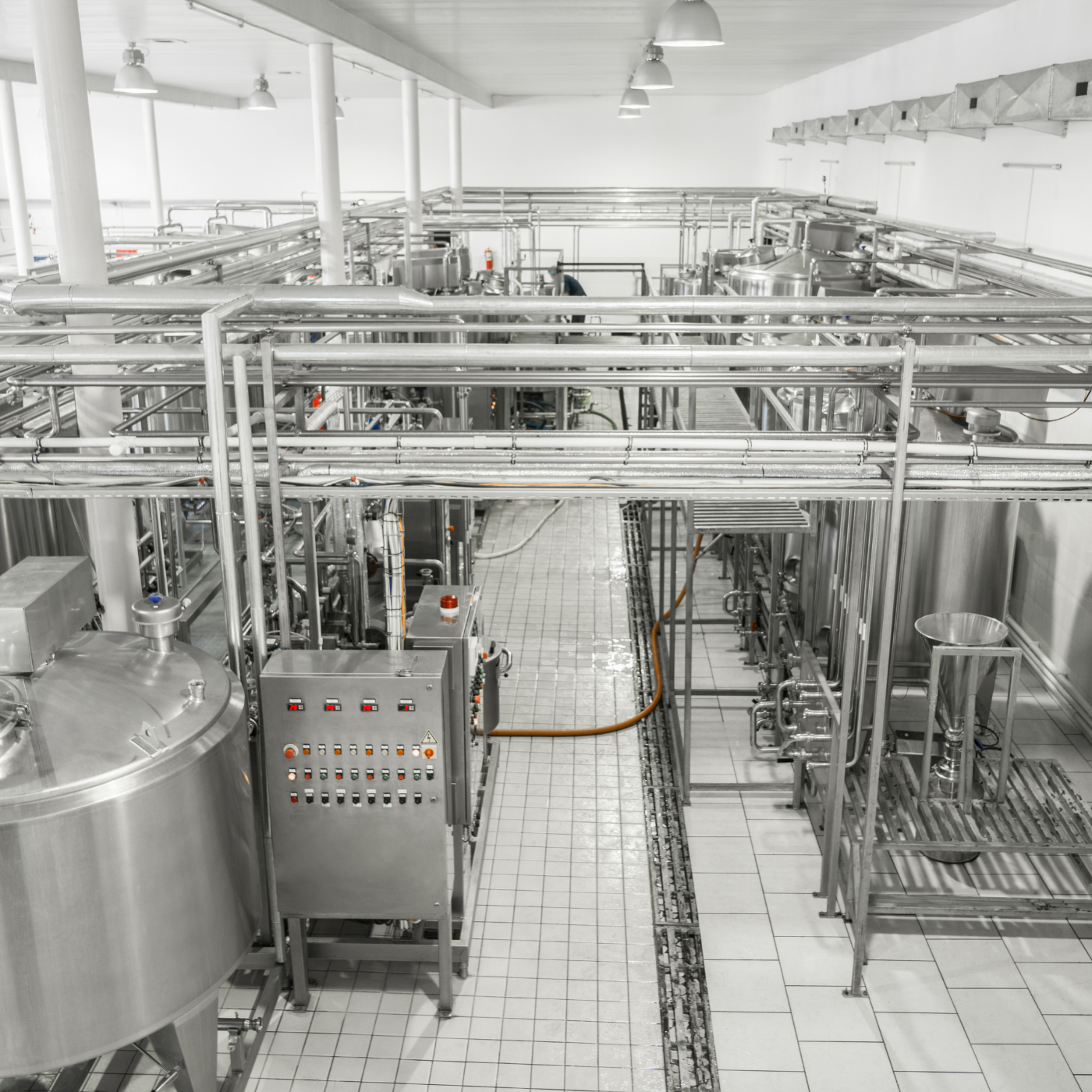
In the lab, development uses small mixers, blenders, and small homogenizers. Industrial production uses entirely different equipment: large industrial mixers, heating and cooling systems, high-pressure homogenizers, and continuous pasteurization systems. These differences often cause significant and unexpected changes in product behavior.
Key Factors Affecting Scale-Up
Mixing
Industrial mixing dynamics differ from lab scale. Key factors: mixing speed, impeller type, and product viscosity. Small changes in these parameters can substantially affect texture and consistency.
Heat Transfer
Pasteurization, cooking, and concentration all behave differently at industrial scale, requiring adjustments to process parameters.
Shear
Mechanical shear during pumping, mixing, or homogenization can affect protein structure, emulsion stability, and texture in ways difficult to predict from lab results.
Adapting the Formulation to Production
Common adjustments: changing stabilizer concentrations to account for higher shear forces, modifying the ingredient addition order, and adapting to different process temperatures and times.
Scale-Up Examples by Category
Functional Beverages
Challenges include protein sedimentation, vitamin degradation under industrial pasteurization, and maintaining emulsion stability at large volumes.
For more detail: Developing Functional Beverages
Protein Bars
Controlling texture and water activity during production is critical – small changes in mixing time or temperature at industrial scale can significantly alter texture outcomes.
For more detail: Developing Protein Bars
Using a Pilot System
Working with a pilot system at an intermediate scale allows testing the production process, evaluating product stability, and making formulation adjustments before committing to a full production run – significantly reducing risk and cost.
Post-Scale-Up Testing
After the first production run, tests must be conducted for stability, shelf life, and sensory quality – compared against lab development benchmarks.
For more detail: Shelf Life Testing in Food Products
The Food Technologist's Role
The food technologist leads the Scale-Up process: formulation adaptation, understanding production equipment, and troubleshooting issues during production trials. Combining technological knowledge with industry experience is essential for a successful lab-to-line transition.
Scale-Up is one of the most critical stages in food product development. The transition from lab to industrial production requires careful adjustments to both formulation and process. Working with food technology experts and advanced labs like Gruda Food Lab makes it possible to reduce risks and improve the product's chances of market success. For broader context: Food Product Development
Related Articles
Let’s create something completely new
We believe in the power of collaboration. Let's explore projects, share insights, and work together to expand the boundaries of food.
