Food Product Development
The Professional Industry Guide
Food product development is one of the most complex and fascinating fields in the modern food industry. Contrary to what many assume, developing a new product is not simply creating a delicious recipe – it is a complete scientific-technological process integrating food technologists, chefs, process engineers, regulatory specialists, and marketing professionals. In a world where consumers seek healthier, more functional products, food companies must innovate rapidly. The process encompasses raw material research, formulation design, shelf life testing, scale-up to industrial production, and regulatory compliance. In Israel, many companies turn to professional labs like Gruda Food Lab – combining culinary expertise with over 20 years of scientific and technological knowledge.
Stages of Food Product Development
Stage 1 – Concept Definition
The first stage defines the product idea: target audience, product category, nutritional values, desired taste, and target price. For example, a functional protein beverage, a vegan protein bar, a low-sugar ice cream, or a natural energy drink. A clear concept is critical to success.
Related article: How to Develop a New Food Product
Stage 2 – Raw Material Research
Ingredients are evaluated for nutritional values, functional properties, stability, taste, and cost. For example, protein product options include whey, pea, soy, or egg protein. The right choice directly affects taste, texture, and shelf life.
Related article: How to Choose Raw Materials for Food Product Development
Stage 3 – Building the Formulation
The formulation is the precise recipe defining the ratio between all ingredients, accounting for stability, texture, taste, nutritional values, and production cost. For example, developing an ice cream requires calculating fat percentage, PAC, POD, and non-fat solids.
Related article: Building a Food Product Formulation
Stage 4 – Shelf Life Testing
Tests examine how long the product maintains quality and safety: microbiological tests, oxidation tests, color stability tests, and texture tests. Accelerated Shelf Life Testing (ASLT) is also used in some products.
Related article: Shelf Life Testing in Food Products
Stage 5 – Scale-Up: From Development to Production
The formulation must be adapted to industrial equipment such as mixing systems, pasteurizers, homogenizers, dryers, and extruders. Adjustments are often necessary to ensure correct product behavior on the production line.
Related article: Scale-Up in Food
Stage 6 – Regulatory Compliance
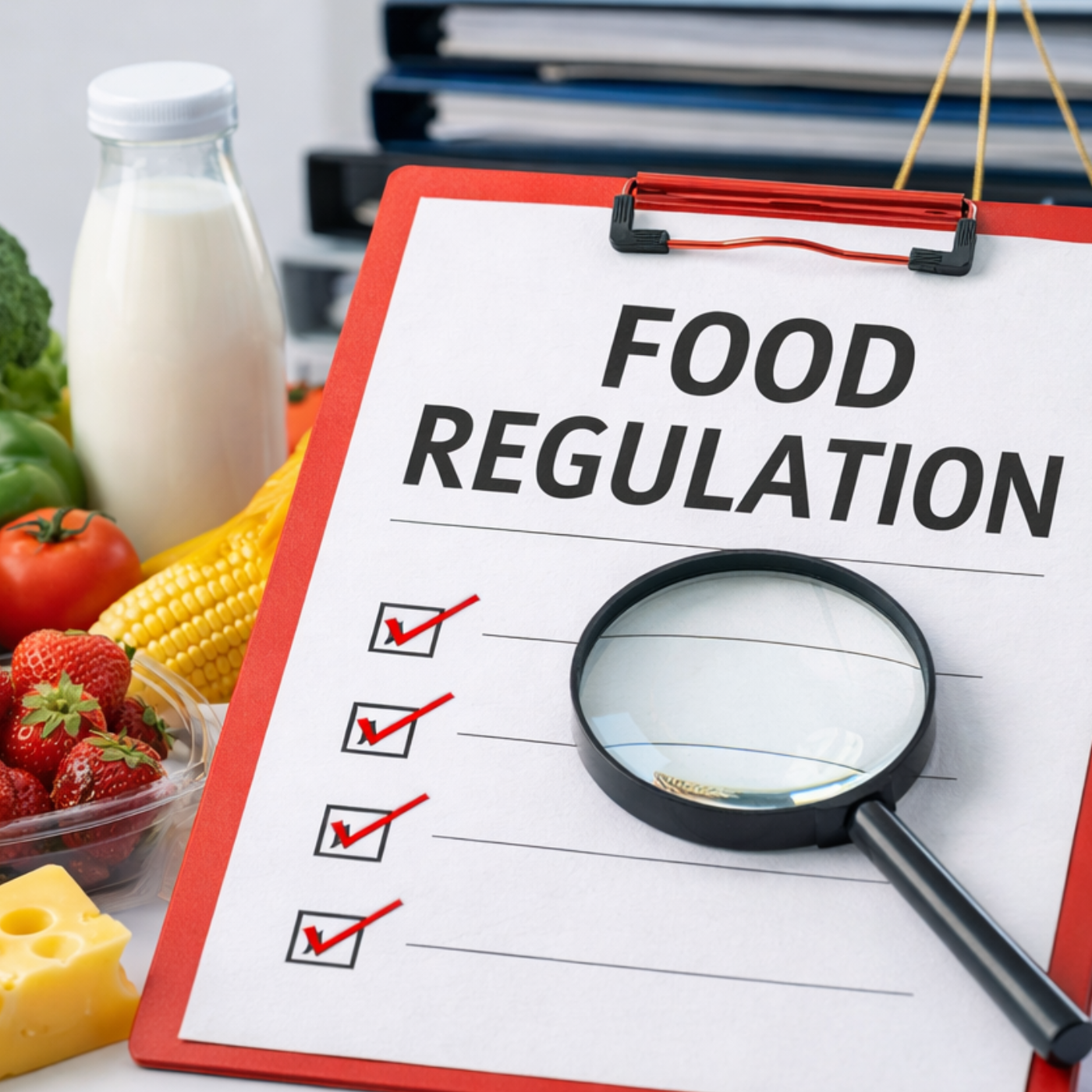
Every new food product must meet regulatory requirements covering nutritional labeling, allergens, food additives, and food safety standards. Many products also require kosher certification.
Related article: Food Regulation in Product Development
Global Trends in Food Product Development
Alternative Proteins
The alternative protein sector is growing rapidly: plant-based protein, fermentation-derived protein, and insect protein.
Functional Beverages
One of the fastest-growing categories globally, containing collagen, vitamins, minerals, and probiotics.
Related article: Developing Functional Beverages
Reduced-Sugar Products
Using sweeteners such as stevia, erythritol, allulose, and other polyols.
Related article: Sweeteners in the Food Industry
Working with a Food Development Lab
External development labs like Gruda Food Lab provide technological knowledge, advanced laboratory equipment, and industry experience – combining culinary excellence with technological stability.
Food product development integrates science, technology, and culinary craft. Through the right combination of raw material research, formulation design, shelf life testing, and production adaptation, it is possible to create innovative products with a genuine competitive advantage.
Related Articles

Let’s create something completely new
We believe in the power of collaboration. Let's explore projects, share insights, and work together to expand the boundaries of food.
