Sauce Development for the Food Industry: The Professional Guide to Savory Sauces, Mayonnaise, BBQ, and the Real Challenges of the Industry
By Liran Gruda
You can take an amazing product and ruin it with the wrong sauce. I say this to clients all the time. You can have a perfect schnitzel, a great burger, or even a beautifully fried potato, and ruin it all with the wrong sauce.
And on the other hand? Sometimes the sauce is exactly what turns an average product into something people remember. Something they come back for specifically. Something people say about it: "There's something special there."
After years of food product development, one thing I can say with confidence is that sauces are much more than "something on the side." They're a memory. They're a signature. They're an eating experience.
And they're also one of the most complex categories in the world of product development because a good sauce needs to be:
- Delicious
- Stable
- Have an appropriate shelf life
- Have the right color
- Have precise mouthfeel
- Behave correctly when heated or chilled
- Perform consistently in production
Why Are Sauces One of the Most Complex Categories in the Food Industry?
Many people think: "It's just mixing a few ingredients." But the truth? Sauces are science. Every sauce involves a delicate interplay between fat, water, acidity, spices, viscosity, stability, and behavior during storage.
When something small doesn't work, you see it immediately: oil separation, spice sedimentation, color change, off-flavors, or a texture that feels "industrial." This is exactly where a food development technologist comes in.
Why a Sauce Sometimes Matters More Than the Product Itself
I know that sounds a bit extreme. But sometimes the sauce is what determines whether a product succeeds or fails. A well-crafted sauce can turn even a simple product into something people come back for specifically. People remember a sauce. They may not always know how to explain why, but they remember. This is exactly why global chains invest years in developing signature sauces.
Types of Savory Sauces, Not Every Sauce is Born Equal
One of the things I love about the world of sauces is that every category behaves completely differently:
- Mayonnaise and Aioli: Perhaps one of the most complex categories. Mayonnaise looks simple, but in practice, it's a very delicate emulsion system.
- BBQ Sauces: A delicate balance between sweetness, smoke, acidity, and spices.
- Burger Sauces: Required to work flawlessly at both high temperatures and in contact with fat.
- Hot Sauces: Achieving color and flavor stability over time is a real challenge here.
- Vegan Sauces: One of the fastest-growing areas in the modern market.
- Reduced-Fat Sauces: The consumer wants less fat but still demands the feel of a rich sauce.
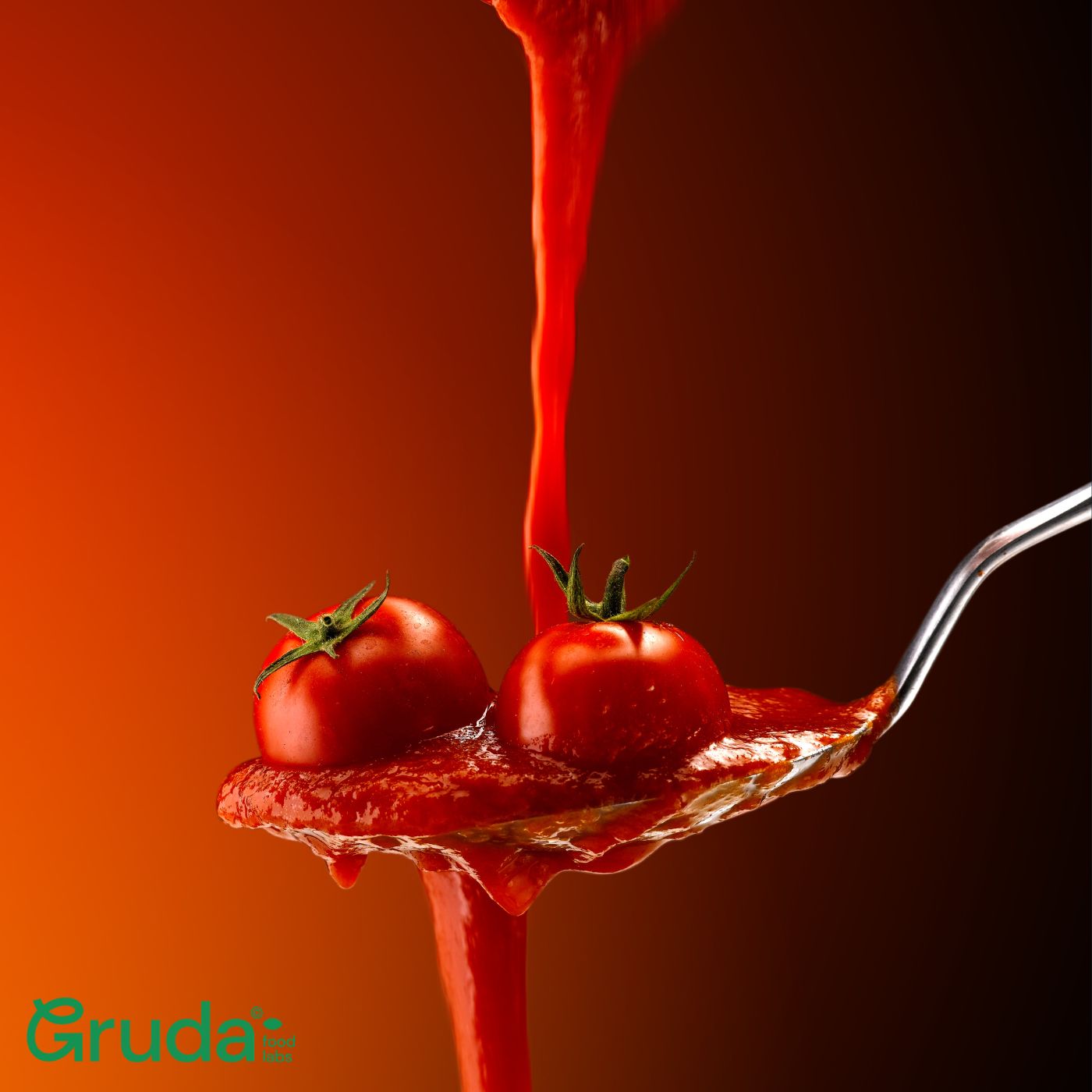
Emulsification - The Secret Behind Most Sauces
One of the most important concepts in the world of sauces is emulsification. In simple terms? It's the ability to make oil and water work together, which is not always natural.
Many of the sauces we know are based on an emulsion system, and mayonnaise is perhaps the most classic example. However, many burger sauces, creamy sauces, and vegan solutions work on similar principles. If the emulsion isn't built correctly, the problems start: oil separation, unstable texture, inconsistent feel, and a weak shelf life.
Mayonnaise - Perhaps the Hardest Sauce to Develop
I know that sounds odd, but mayonnaise is one of the sauces that's easiest to ruin. At its core, it's an emulsion, a system where oil and water learn to work together. Since that doesn't always happen naturally, a good mayonnaise relies heavily on proper emulsification, precise mouthfeel, balanced acidity (which is critical for shelf life), and strict stability.
Why does mayonnaise break?
This is one of the most common questions. There are many possible reasons: an incorrect process, inappropriate shear, an unbalanced emulsifier system, temperature changes, or raw material issues. Sometimes a small process change solves a problem that seemed completely unsolvable.
pH in Sauces, Why It's Critical
In the sauce category and especially in mayonnaises and savory sauces, the acidity level is critical for shelf life and safety. The real challenge is finding the balance. You can easily produce a product that holds on the shelf, but if it doesn't taste good, the consumer won't come back.
Types of Oils, Why They Change Everything
One of the things that's less talked about in sauce development is oil selection. But in practice? It changes almost everything: mouthfeel, stability, behavior when chilled, off-flavors, and even the perception of richness. Sometimes a small change in oil type completely changes the entire eating experience.
BBQ Sauce - Much More Than Sugar and Smoke
Many think BBQ sauce is just ketchup with a smoky flavor. But a good BBQ sauce is far more complex. There's a deep interplay between sweetness, acidity, smoke, spices, viscosity, and color.
The real question developers must answer is: how does it behave when heated? Does it burn? Does it turn bitter? Does it retain its flavor profile?
BBQ Sauces - America vs. Europe
One of the interesting things in the world of sauces is that there's no "one BBQ." In the US, there are completely different styles: Kansas Style, Carolina Style, Texas Style, Smoky BBQ, and Sweet BBQ. In Europe, on the other hand, there's often a preference for slightly more balanced, less aggressively sweet sauces. This matters greatly when developing a product because the target market changes everything.
Why Mouthfeel in Sauces is So Important
People don't always know how to explain why a sauce feels "right," but they feel it instantly. Sometimes a sauce tastes good, but the sensation isn't right, it feels too heavy, too thin, too gel-like, or too sticky. Mouthfeel is exactly where a sauce goes from just a tasty product to a product people seek out specifically.
One of the things I check in almost every development is how the sauce sits in the mouth:
- Does it spread correctly?
- Does it cling to the product properly?
- Does it disappear too fast?
- Does it feel too heavy?
In a great sauce, there is always a perfect balance.
Salt, Acidity, and Umami - The Game People Don't Always Understand
If there's something I learn again and again in sauce development, it's that flavor is psychology. Sometimes you don't need more salt; you need balance.
- Salt: Doesn't just add saltiness; it actively enhances other flavors.
- Acidity: Builds freshness and makes the sauce feel "alive."
- Sweetness: You don't always taste it explicitly, but it helps balance the sharp notes.
- Umami: One of the most important tools in the world of savory sauces, giving the product the ability to feel deeper, richer, and rounder.
Restaurant Mayonnaise vs. Industrial Mayonnaise
Restaurant mayo operates in a completely different environment: there is no need for a long shelf life, no logistics, no complex supply chain, and no shelf stability requirements. In contrast, industrial mayonnaise needs to be completely stable, safe, consistent, durable, and still taste amazing after sitting on a shelf over time. This is exactly where the real challenge of the product development world begins.
Hot Sauces - Why They're Far More Complex Than People Think
Today, almost every brand wants its own hot sauce — Sriracha, Chili, Jalapeño, or Ghost Pepper. But hot sauces bring unique formulation challenges: color stability, particle sedimentation, the behavior of heat over time, and shifts in consumer perception. Sometimes, the heat literally "disappears" after sitting on the shelf for a while.
Hot Fill, Pasteurization, and Cold Fill - Why Process Matters
One of the most critical steps in sauces is understanding the production process. A sauce does not behave the same way in every system. Solutions that work great in one production system may work poorly in another. That's why in real sauce development, you have to think from day one: how will the product behave in the factory?
Shelf Life - The Real Challenge
Sauces look simple, but they're a very sensitive system. Shelf life depends on raw materials, the production process, acidity balance, stability, microbiology, and packaging. And yes, pH is absolutely critical here too.
Why Sauces Fail in the Factory
After years of food product development, I can say that a large portion of sauce problems repeat themselves:
- Oil Separation: One of the most common commercial failures.
- Spice Sedimentation: The sauce looks great on day one, and then spices start to settle at the bottom.
- Unstable Viscosity: It feels perfect in the lab, but two weeks later in the bottle, it changes completely.
- Color Change: A major challenge, especially in hot and BBQ sauces.
- Off-Flavors: Sometimes a stabilizer system creates the wrong feel or taste.
Clean Label - Can You Build a Stable Sauce Without Feeling "Chemical"?
Yes, but it's hard. The modern consumer wants a short ingredient list, fewer E-numbers, and a more natural feel. But they still expect the exact same performance. This is where the challenge of the food product development world truly lies.
Vegan Sauces - Can You Replace Egg in Mayonnaise?
Yes, but not every solution delivers the same experience. In vegan mayo, the challenge isn't just stability, it's also mouthfeel. The question is always how to make the sauce feel rich and creamy without using an egg.
The Most Common Mistakes in Sauce Development
To summarize, here are the pitfalls developers must avoid:
- Oil separation
- Spice sedimentation
- Unstable color profiles
- Formulating a sauce that is too heavy
- Formulating a sauce that is too thin
- Chasing shelf life at the absolute expense of taste
Sauces for Burgers, Chicken, and Schnitzel - Why They Behave Differently
One of the things I always explain to clients is that a sauce doesn't stand alone; it is part of a system. A burger sauce needs to behave differently from a schnitzel sauce. A sauce meant for hot, grilled chicken behaves differently than a cold dipping sauce.
That's why at Gruda, when we develop sauces, we examine how the sauce behaves with the dish as a whole: whether it melts too much, whether it's too heavy, whether its flavor disappears, or whether it dominates the palate too much.
Global Trends in Sauces - Where is the Market Heading?
The sauce world is changing fast. Today's consumer wants it all: less sugar, fewer unfamiliar ingredients, more protein, a more natural feel, and authentic flavors.
- Clean Label Sauces: Shorter ingredient lists, less of a "chemical" feel, and more familiar ingredients.
- Reduced-Sugar BBQ: BBQ sauces with significantly less sugar without losing the classic flavor experience.
- Protein Sauces: Sauces formulated with an improved nutritional value profile.
- Functional Sauces: Sauces featuring functional ingredients, dietary fiber, or an advanced nutritional profile.
- Premium Signature Sauces: Brands want a sauce people recognize immediately the flavor that makes the consumer say: "That's their sauce."
Retail vs. QSR - Why You Don't Develop the Same Sauce
One of the most common mistakes is thinking that a restaurant or QSR (Quick Service Restaurant) sauce needs to behave like a retail shelf sauce. In practice, these are completely different worlds:
- Retail requires a long shelf life, high stability, ultimate consistency, and good behavior after opening.
- QSR / Food Service requires high operational durability, excellent behavior under heat, correct flow rates, and compatibility with kitchen dispensing equipment.
That's why in professional sauce development, you have to understand upfront: where will the sauce live?
Something I Learned After Years in Sauce Development
I remember a client who came to us with a sauce that was "almost perfect." The flavor was good, the cost was good, and the color was nice. But something wasn't working, consumers simply weren't coming back.
After quite a few tastings, we understood the problem wasn't in the flavor at all; it was entirely in the mouthfeel. The sauce felt far too heavy. A relatively small fix changed the entire picture. And that's one of the most important things to understand: the problem isn't always where you think it is.
From Lab to Factory - The Real Challenge
What works great in the lab doesn't always work in commercial production. High-speed shear, heat, mixing times, and industrial equipment change everything. That's why scale-up is one of the most significant hurdles in product development.
FAQ Sauce Development
Why does mayonnaise break?
It depends heavily on the production process, shear forces, the choice of emulsion system, and factory working conditions.
Why does BBQ sauce change color?
Color degradation usually results from exposure to heat, interacting sugars, and specific spices.
Can you produce a vegan sauce with a rich mouthfeel?
Yes, but it requires precise, technologically advanced development to mimic egg fats.
Why do sauces sometimes separate on the shelf?
This is almost always due to an unbalanced stability or hydrocolloid system.
How do you achieve a good shelf life in sauces?
Through applying the right thermal process, strict system/acidity balance, protective packaging, and professional planning.
Why does one sauce feel heavy and another light?
It's a delicate combination of the chosen oils, viscosity agents, the manufacturing process, and target mouthfeel parameters.
Can you build a clean label sauce?
Yes, but you need to deeply understand the chemical and physical limits of natural raw materials.
How We Approach Sauce Development at Gruda
We don't start with a recipe; we start with questions. Who is the target audience? Retail? QSR? Food service? What is the required shelf life? What mouthfeel are we targeting? How should the sauce behave when heated? What's the target cost per kilo?
Real sauce development isn't just flavor. It's a profound understanding of technology, culinary craft, and consumer behavior.
Want to develop a new sauce or improve an existing product? If you're looking for professional sauce development, mayonnaise formulation, shelf life improvement, food product development solutions or industrial scale-up, at Gruda, we accompany food companies, factories, and entrepreneurs from the initial idea stage all the way through to commercial production.
Related Expertise at Gruda:
- Food product development
- Shelf life extension in food
- Off-flavor solutions
- Setting up production lines
- Functional beverage development
Let’s create something completely new
We believe in the power of collaboration. Let's explore projects, share insights, and work together to expand the boundaries of food.
