Gluten-Free Blend Development: How to Build Structure That Holds Up in Production
Noa Carmi · Gruda Food Lab Editorial
A gluten-free loaf can come out of the oven looking ready for the shelf and fall apart under the slicing blade. Another may slice cleanly on bake day and crumble the next morning when someone spreads butter on it. Loaf volume is worth measuring, but the slice still has to work when the customer opens the bag.
What are you replacing when you take gluten out?
In wheat dough, the gluten network stretches and holds the gas produced during proofing. In gluten-free product development, several ingredients share that job. Flours supply flavour and colour, starches help set the structure during baking, and fibres and hydrocolloids influence viscosity and how water behaves in the mix.
Psyllium, xanthan gum or HPMC?
- Psyllium husk binds water and forms a gel. Check slice cohesion, shapeability and any gummy mouthfeel after cooling.
- Xanthan gum builds viscosity before baking. Watch depositing flow, bubble distribution and chew.
- HPMC forms a gel when heated and can help retain gas and support loaf structure. Check volume, settling after cooling and next-day slice integrity.
Changing the flour, starch or water can change how any of these ingredients performs. A single hydration level can favour whichever option happens to suit the starting formula.
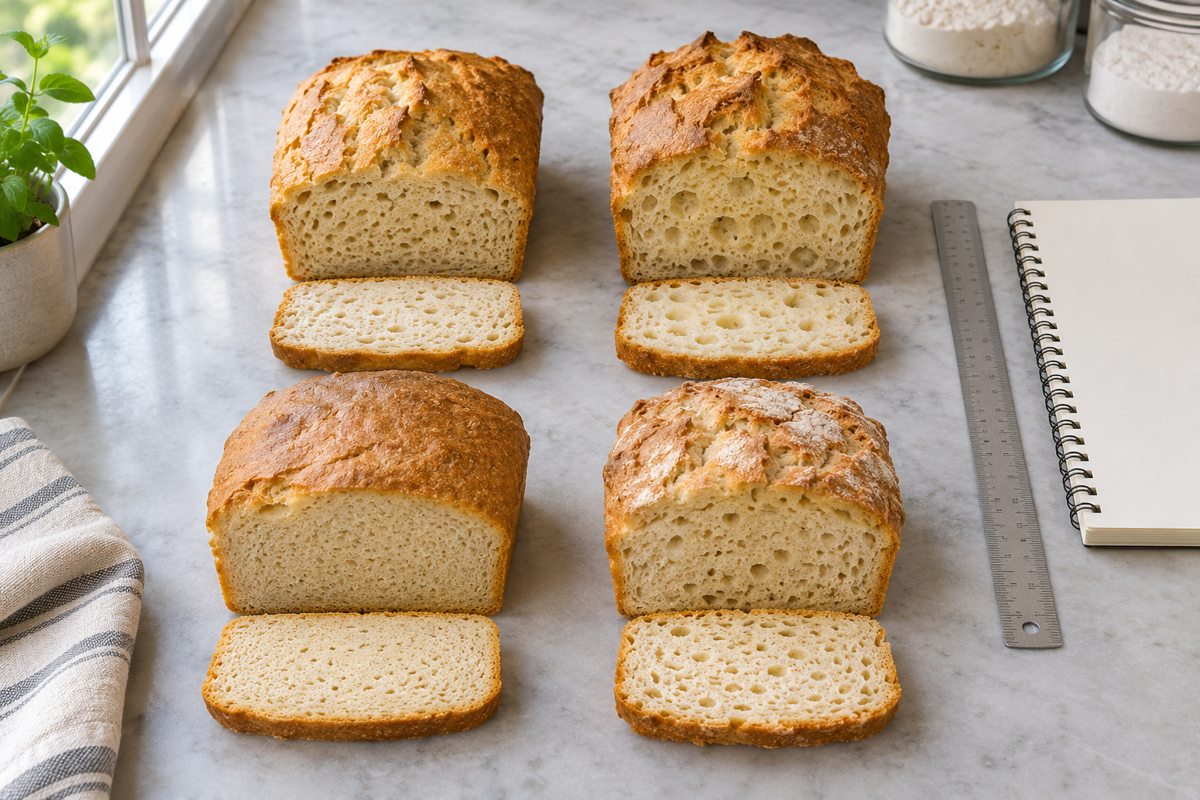
A first trial in four batches
Start with one flour and starch base. Compare two systems for building structure, each at two water levels around a workable starting point. Keep the pan, portion weight and baking conditions consistent. If you have an existing commercial formula, bake it alongside the trials as a control.
Record depositing flow, settling after cooling and slice quality. Try spreading a topping on each slice on bake day and again the next day after identical storage. Carry the strongest candidates into testing over the intended shelf life. For free-standing rolls, give more weight to shape retention. For cakes, prioritise crumb uniformity and softness.
What changes on the pilot line?
In a larger batch, a blend that poured easily in the lab can thicken before it reaches the depositor. Check flow at the beginning and end of depositing. Record ingredient addition order, water temperature and hold time. If the product will be sold as a dry mix, repeat the trial using the preparation instructions the customer will receive.
Review supplier specifications, possible gluten cross-contact points, cleaning and sampling alongside texture development. Confirm the labelling rules in the intended market before signing off on the pack.
Recommended reading
• Fruit and protein smoothie development: challenges from the lab
• Plant-based meat isn't weakening, it's growing up
• Microwave vacuum drying: when technology serves culinary craft
• Inulin: a key prebiotic fiber in food product development
Let’s create something completely new
We believe in the power of collaboration. Let's explore projects, share insights, and work together to expand the boundaries of food.
