Agar-Agar

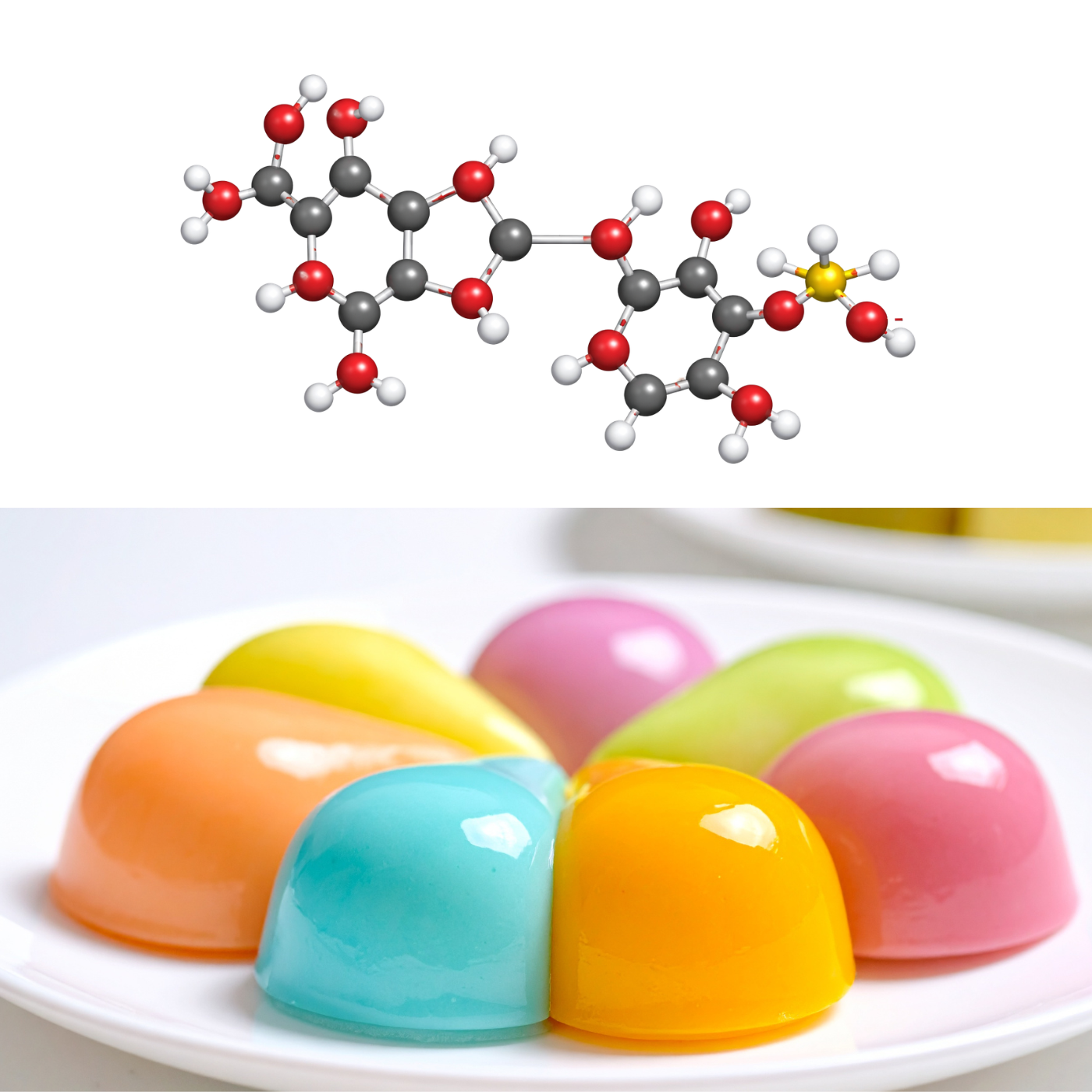
Agar-agar is one of the most important natural gelling agents in the modern food industry. It is a polysaccharide derived from red algae, used as a gelling, thickening, and stabilizing agent across a wide range of products. In recent years its use has grown significantly, mainly due to increasing demand for vegan products and plant-based raw materials.
In food product development, agar-agar enables the creation of stable, transparent, and strong gel structures even at relatively low concentrations. It is used both in industry and in advanced chef kitchens, especially in modern gastronomy. Due to its unique properties, agar-agar has become one of the most important tools for food technologists and chefs developing new textures.
In advanced labs like Gruda Food Lab, agar-agar is used across a range of applications from dairy products and desserts to complex gel systems for functional products.
Source and Extraction
Agar-agar is extracted from red algae of the Rhodophyceae family, primarily from the Gelidium and Gracilaria species. These algae grow mainly in cold waters in tropical and subtropical regions, especially in Japan, South Korea, China, Indonesia, and Chile.
The extraction process begins with collecting the algae from the sea, after which they are washed and dried. In the next stage the algae are boiled in hot water for several hours, a process that allows extraction of polysaccharides from the algal cell wall. After filtration a thick solution is obtained which, upon cooling, forms a gel. The gel is cut, dried, and processed into powder or flakes.
The result is a natural gelling material with the ability to form a particularly stable three-dimensional structure.
Chemical Structure
Agar-agar is composed of two main components: agarose and agaropectin. Agarose is the polysaccharide responsible for the gel-forming ability of the material, while agaropectin contains sulfate groups that affect the solubility properties and electrical charge of the molecule.
Agarose is built from repeating units of two main sugars: galactose and 3,6-anhydro-galactose. The molecular structure of agarose allows hydrogen bonds to form between the polysaccharide chains as the temperature drops after heating. These bonds create a three-dimensional network that traps water within it, producing a stable gel.
This structure is the reason agar-agar is capable of forming particularly strong gels at very low concentrations.
Key Functional Properties
One of the most important properties of agar is its gel-forming ability. Even at concentrations below one percent a stable gel can be obtained. As the agar concentration increases, the gel becomes firmer.
A soft gel is usually obtained when the agar concentration is relatively low, while a strong gel is obtained when the concentration is higher. This property allows food technologists to control the final texture of the product.
A further unique characteristic of agar is the large difference between its gel-forming temperature and its melting temperature. Agar dissolves in hot water at a temperature close to boiling, but the gel forms when the solution cools to approximately 35 to 40 degrees Celsius. Once formed, the gel remains stable up to approximately 85 degrees Celsius.
This means that agar-based products can remain stable at room temperature - a particularly important property in the food industry.
Gel Types in Agar
Agar-agar typically creates a strong and relatively brittle gel. When cut, a clean and clear cut is obtained, unlike more elastic gels such as gelatin. This property makes it ideal for producing gel cubes or precise shapes.
By combining agar with other hydrocolloids the texture can be modified. For example, combining with locust bean gum can make the gel less brittle and create a more elastic texture. Combining with xanthan can give the system greater stability and reduce brittleness.
Many chefs also use agar to create what is called a "fluid gel." In this technique a regular agar gel is first created, then fully cooled and finally blended. This breaks the three-dimensional network of the gel and produces a thick mixture with a smooth but stable texture.
Temperature Effects on Agar
For agar to dissolve fully, the solution must be brought to a full boil. If the agar does not reach a sufficient temperature, the molecular structure will not develop properly and the gel will not form.
After full dissolution, the system must be cooled to allow gel formation. At this stage the polysaccharide chains begin to arrange into an ordered structure and form bonds between them.
This process is the basis for gel formation.
Sugar Effects on Gel Structure
Sugars can significantly affect the behavior of agar. Sucrose, for example, may strengthen the gel structure and increase its stability. Other sugars may soften it.
In sugar-rich systems, such as confectionery or fruit jellies, the agar concentration must be adjusted to achieve the desired texture.
Acidity Effects
Agar is relatively stable across a wide pH range, but in a very acidic environment hydrolysis of the polysaccharide chains may occur. When the pH is very low, the gel structure may weaken.
Therefore in particularly acidic products, such as certain fruit juices, it is advisable to add agar after heating and avoid prolonged cooking in acidic conditions.
Culinary Applications
In the modern culinary world, agar-agar is used to create a wide variety of textures. Chefs use it to produce gel cubes, gel spaghetti, dish coatings, and complex layered structures.
Modern techniques such as fluid gels and gel caviar are often based on agar.
Industrial Applications
Agar-agar is used in industry across a wide range of products. It is particularly common in desserts, puddings, dairy products, confectionery, and fruit jellies. It also serves as a gelatin substitute in vegan products.
In the beverage industry it is sometimes used at very low concentrations to stabilize particles and prevent sedimentation.
Technological Advantages
Agar-agar is considered a raw material with many advantages. It allows the creation of particularly strong gels at low concentrations, and is stable at relatively high temperatures. It is also a natural plant-based material, making it suitable for vegan products and markets with religious restrictions on gelatin use.
An additional advantage is the high transparency of the gel, which allows for aesthetically appealing products.
Technological Limitations
Despite its advantages, agar has several limitations. The gel it creates tends to be more brittle compared to gelatin. Under very acidic conditions or at high temperatures over extended time, the gel structure may weaken.
Through appropriate combinations with other hydrocolloids, some of these limitations can be overcome.
Agar in New Product Development
In modern food product development, agar-agar is often used to create complex structural systems - for example, structures that simulate fat texture in low-calorie products, or gels that serve as a matrix for controlled flavor release.
In food development labs it is also used for developing new vegan products, especially in desserts and plant-based cheeses.
Summary
Agar-agar is one of the most important gelling agents in the food industry, derived from red algae with a unique ability to create stable, transparent, and strong gels. These properties have made it a central ingredient in both industry and the modern culinary world.
Its use continues to grow with the expansion of vegan and functional products, making it an essential tool for food technologists and chefs developing innovative food products.