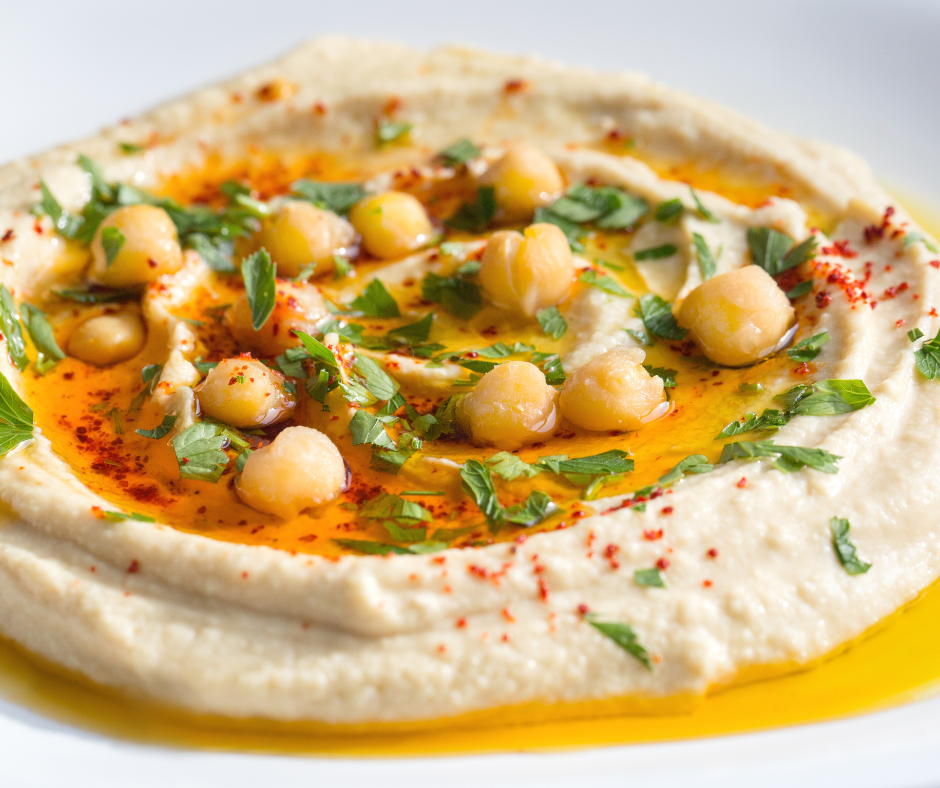
Hummus- Israel’s Most Iconic Dip Professional Guide to Developing Winning Hummus, Chickpea Varieties, Shelf Life, and the Technology Behind the Bowl
By Liran Gruda | Development Chef, Gruda Food Lab
I was born in Acre (Akko). Some people would say it is one of the hummus capitals of Israel, perhaps even of the Middle East.
Anyone who knows Acre understands that hummus there is not just food. It is identity, tradition, and sometimes even politics. Growing up between famous hummus spots taught me something important: there is no single formula for great hummus. There is philosophy.
Good hummus is not only about flavor. It is mouthfeel, creaminess, tahini ratio, acidity balance, temperature, texture, and memory. Today, after years of food product development, I understand that tiny details are exactly what make hummus one of the simplest, and most complex, products to develop in the food industry.
If There Is One Product That Tells the Israeli Story, It Is Probably Hummus
Behind every bowl of truly great hummus lies an entire world of technology, raw materials, culinary understanding, process control, microbiology, stability, and consumer psychology.
Hummus is not just a recipe. It is a system of ingredients, process engineering, stability, and eating experience. This is why when developing hummus professionally, you cannot focus only on formulation, you need to understand the full story.
Everything Starts with the Chickpea Variety
Most of the hummus industry relies on Kabuli chickpeas, but even within this category there are enormous differences. Traditional hummus restaurants in northern Israel often prefer smaller chickpeas, claiming they provide deeper flavor and better mouthfeel.
In development labs we examine:
• Chickpea size influences cooking time, grinding, and creaminess
• Protein content impacts thickness and stability
• Skin thickness dramatically affects mouthfeel
• Water absorption one of the most critical parameters in hummus development
Soaking, The Most Underestimated Step
The difference between exceptional hummus and average hummus often starts during soaking. Soaking affects texture, color, off-flavors, cooking uniformity, water absorption, and digestibility. Shortcuts rarely work in great hummus development.
Cooking, Where Everything Can Succeed or Fail
Excellent raw materials can be ruined by poor cooking. Great hummus should be soft but not overcooked, creamy but not lifeless. Cooking impacts texture, color, flavor, creaminess, and grinding performance.
Tahini, The Quiet Hero
Tahini often determines whether hummus feels extraordinary or average. Roast profile, oil behavior, refrigeration performance, separation, and mouthfeel all matter.
Personally, I strongly believe in a 35–45% tahini range in hummus formulations ,depending on the desired positioning and eating experience.
Restaurant Hummus vs. Industrial Hummus
Restaurant hummus feels different mainly because of freshness. Industrial hummus must survive logistics, refrigeration, and shelf life requirements while still tasting fresh. That is where food technology becomes essential.
The Microbiology of Hummus
Hummus is a highly sensitive microbiological system due to water, fat, protein, and organic matter. Since many products are not post-packaging pasteurized, stability often depends on process hygiene, pH, preservatives, packaging, and cold chain management.
Shelf life is built on:
• Raw material quality
• Hygiene
• Correct process
• Packaging
• Cold chain
• Acidity balance
Packaging
Packaging is part of the product itself. Oxygen barrier, sealing integrity, product behavior after opening, and stability all dramatically influence shelf life and quality.
Common Mistakes in Hummus Development
Too much tahini can make the product heavy. Too little makes it feel poor. Uneven cooking creates graininess. Chasing shelf life alone often removes the soul of the product.
The Future of Hummus
We are seeing growth in high-protein hummus, functional hummus, clean-label solutions, and nutritionally enhanced concepts. But innovation can never come at the expense of taste.
Scale-Up, The Real Challenge
What works perfectly in a one-kilogram lab batch may fail at industrial scale. Mixing, flow, cooling, and process times change dramatically. Real product development begins with thinking about manufacturing from day one.
Developing Hummus with Gruda
After years of working with food factories, chefs, and technologists, I still believe hummus is one of the most fascinating products to develop. Great hummus feels simple, but behind that simplicity is serious technology that consumers never see.
At Gruda, we begin with questions: target audience, shelf life, flavor profile, target cost and behavior after opening. Food product development is not mixing ingredients, it is combining culinary expertise, technology, and consumer understanding.
Whether you are a manufacturer, startup, entrepreneur, or private label brand, Gruda supports companies from concept to commercialization.
Let’s create something completely new
We believe in the power of collaboration. Let's explore projects, share insights, and work together to expand the boundaries of food.
