Creatine in the Food Industry
Why Everyone Wants to Develop Products With It And Why Most Fail Along the Way
By Liran Gruda | Gruda Food Lab
If you had asked me ten years ago what people thought about creatine, the answer would probably have been simple: a gym supplement.
Something bodybuilders take with a protein shake to gain muscle mass.
But something has changed.
In recent years, we’ve seen a major shift in the world of functional food. Creatine is no longer perceived solely as an ingredient for athletes.
Today, it’s entering categories like:
- Brain health
- Cognition
- Healthy aging
- Recovery nutrition
- Medical nutrition
- Women’s wellness
- Functional beverages
- Extreme mission nutrition
For professionals involved in food product development, this makes creatine one of the most excitingת and also one of the most challenging ingredients in formulation.
Creatine is nutritionally impressive, but technologically sensitive.
Many companies add creatine to a product, test it on production day, and everything looks great.
Then a few months later, shelf-life issues appear:
- Loss of active ingredient
- Off-flavors
- Poor stability
- Sedimentation
- Texture changes
And that’s where the real work of food technologists and R&D teams begins.
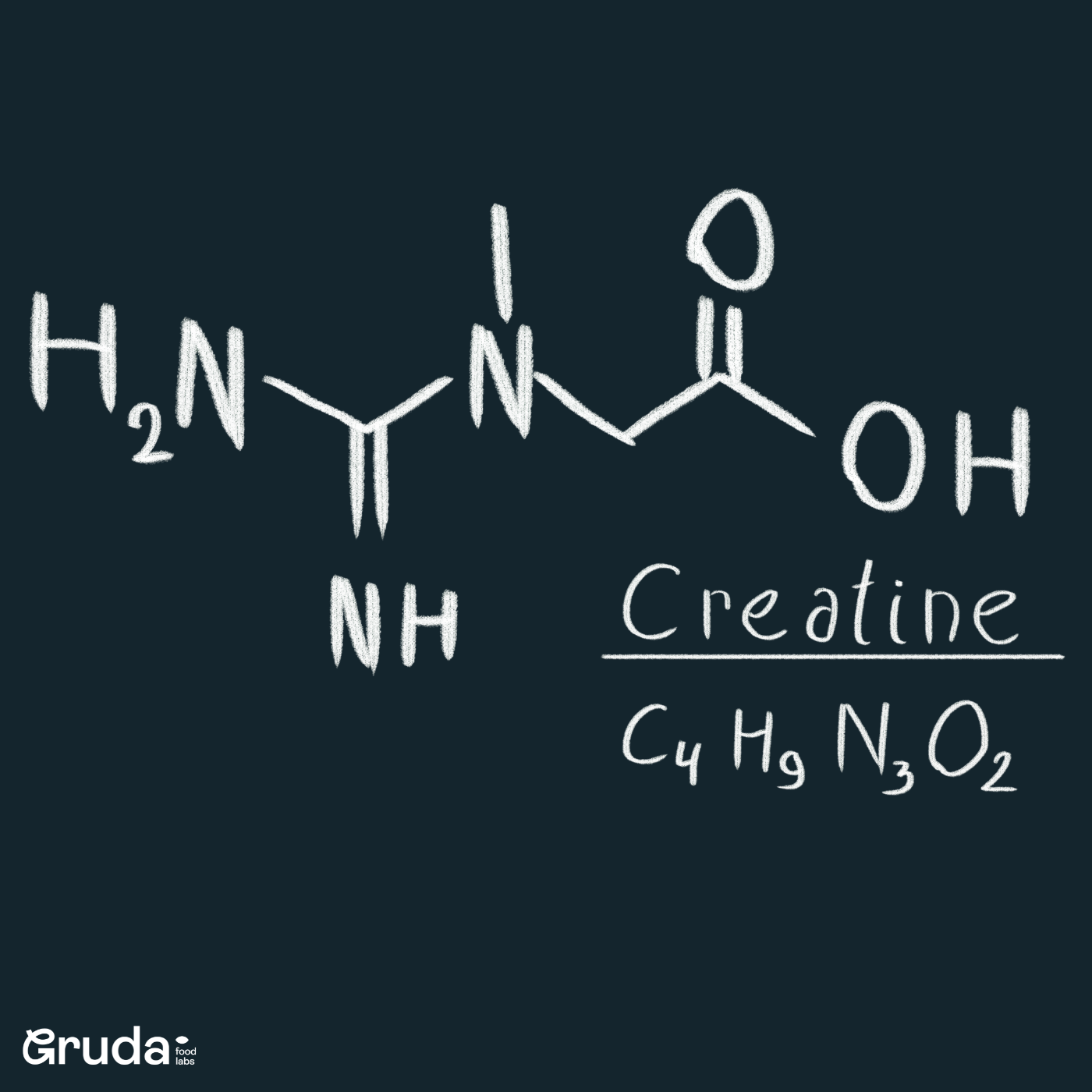
What Is Creatine?
Creatine is a naturally occurring molecule produced by the body, mainly in the liver, kidneys, and pancreas.
Most creatine is stored in muscle tissue, where it plays a role in rapid energy production.
Simply put:
Creatine helps the body produce readily available energy quickly.
When the body needs immediate energy during intense exercise, sprinting, explosive movement, or even mental exertion, creatine helps recycle ATP, the body’s primary energy currency.
You can think of it as the body’s “backup battery.”
Why Creatine Became So Popular
The body relies on ATP for energy, but ATP reserves are limited.
Creatine supports the phosphocreatine system, which helps rapidly regenerate ATP during high-demand situations such as:
- Physical performance
- Recovery
- Mental fatigue
- Stress
- Cognitive exertion
This is one reason creatine has expanded beyond sports nutrition into:
- Wellness
- Brain performance
- Healthy aging
- Military nutrition
- Medical nutrition
- Space nutrition research
Types of Creatine on the Market
Creatine Monohydrate, The Gold Standard
This remains the most researched and commercially practical form of creatine.
Advantages
- Extensive clinical research
- Good stability in powder systems
- Cost-effective for manufacturing
- Strong absorption profile
- Relatively straightforward regulation
For most functional food projects, this is the preferred starting point.
Creatine HCL
Known for higher solubility and sometimes useful in beverage systems.
Challenges
- More expensive
- Less clinical evidence
- Not always worth the added cost
Buffered Creatine
Often marketed as more stable in acidic systems.
In practice, the technological advantage is not always significant.
Creatine Ethyl Ester
Previously marketed aggressively, but some studies suggest:
- Lower stability
- Faster degradation
Why Creatine Is a Technological Challenge
If there’s one sentence every functional beverage developer should remember:
Creatine loves powder and dislikes water over time.
In aqueous systems, especially acidic environments, creatine gradually degrades into creatinine.
That creates several problems:
- Reduced active ingredient
- Weaker nutritional claims
- Shelf-life instability
- Consumer trust issues
The real question is not: “Did we add creatine?”
The real question is: “How much creatine remains after 9 months?”
Product Formats That Work Best With Creatine
Drink Powders
Usually the safest and most stable category.
Advantages
- No water
- Reduced degradation
- Long shelf life
- Accurate dosing
- Easier formulation
Applications include:
- Sports hydration
- Recovery drinks
- Wellness blends
- Cognitive performance powders
Daily Sachets
An excellent format for combining creatine with:
- Electrolytes
- Adaptogens
- Protein
- Nootropics
Benefits include convenience and precise dosage control.
Frozen Desserts & Protein Ice Cream
Frozen systems may help preserve stability.
Potential categories include:
- Recovery ice cream
- Sports gelato
- High-protein frozen desserts
Gummies
A highly popular category but technologically difficult.
Challenges
- Water activity
- Heat exposure
- Acidic systems
- Long shelf life
- Difficulty reaching effective doses
A clinically relevant creatine dose (3–5g) is difficult to deliver in gummies without compromising texture and taste.
The Sensory Challenge
Creatine is not considered an extremely difficult ingredient from a flavor standpoint, but at effective doses it can contribute:
- Minerality
- Bitterness
- Dryness
- Metallic notes
- Chalky mouthfeel
Especially when combined with:
- Magnesium
- Vitamins
- Protein
- Nootropics
- Botanical extracts
Individually, ingredients may taste acceptable. Together, they can become a sensory disaster.
This is where collaboration between:
- Food technologists
- Flavorists
- Development chefs
becomes critical.
Regulation Matters From Day One
Creatine regulations vary significantly between countries.
Before development begins, companies should evaluate:
- Supplement vs functional food classification
- Permitted claims
- Allowed dosages
- Labeling requirements
- Export restrictions
Ignoring regulatory strategy early can become very expensive later.
The Future of Creatine in Functional Food
We will likely see major growth in:
- Cognitive beverages
- Women’s wellness products
- Healthy aging nutrition
- Functional dairy
- Medical foods
- Recovery products
- Military nutrition
- Space nutrition
Creatine is transitioning from a sports supplement ingredient into a mainstream functional nutrition ingredient.
Final Thoughts
Creatine is no longer just a gym supplement.
It is becoming a strategic ingredient in the future of functional food.
But with that opportunity comes responsibility.
Factors like:
- Stability
- Acidity
- Shelf life
- Sensory quality
- Processing conditions
- Packaging
- Dosage
all determine whether a product becomes a commercial success or simply a promising idea that fails on the shelf.
A truly successful product is one that still performs months later in the hands of the consumer.
Let’s create something completely new
We believe in the power of collaboration. Let's explore projects, share insights, and work together to expand the boundaries of food.
